Vision
We, the Local Church of Novaliches, are a Christ-centered community of disciples, responding to the needs of the people, journeying with the Blessed Virgin Mary towards the newness and fullness of life.
Rooted in faith since 2002 - serving the faithful of Quezon City and Caloocan with pastoral care, mercy, and the light of the Gospel
The diocese of Novaliches was created by Pope John Paul II on December 7, 2002, by virtue of his Apostolic Constitution Animarum Utilitati, and was canonically erected on January 16, 2003, from the Archdiocese of Manila. The diocese previously existed as the Ecclesiastical District of Quezon City-North, which was renamed the District of Novaliches in 2002.
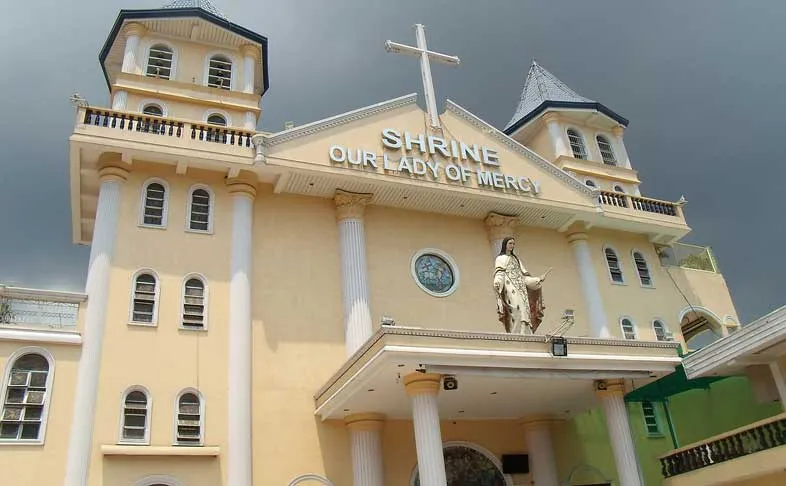
As of June 2026, the diocese is composed of 74 full-fledged parishes (five of which are diocesan shrines) and one mission area, clustered into twelve vicariates. The diocese's principal patron is Jesus, the Good Shepherd named after the cathedral of the same name, and patroness is Blessed Virgin Mary under the title Our Lady of Mercy.
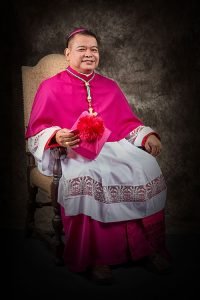
The ecclesiastical territory that is now known as the Diocese of Novaliches used to be an administratively constituted local church district under the Archdiocese of Manila. It was during the time of His Eminence Jaime Cardinal Sin, Archbishop of Manila, that what used to be Quezon City-North Ecclesiastical District (QC-NED) together with a small portion of the Quezon City-South Ecclesiastical District added to it, was fused with that remaining part of Novaliches that falls within Caloocan City and became the new local Church of Novaliches. December 7, 2002, the eve of the Solemnity of the Immaculate Conception, Patroness of the Archdiocese of Manila, was the day this new local Church with its Seat at the Archdiocesan Shrine of the Good Shepherd, Fairview, Quezon City, was created and established by virtue of a Vatican decree signed by then Pope, and now Saint, John Paul II.
Indeed, this can be said of the Diocese of Novaliches which was one of the first two Dioceses established in the country at the beginning of the 21st century, along with the Diocese of Parañaque, in 2002. The Dioceses of Kalookan, Pasig, and Cubao followed in 2003.
It may also be said that the Diocese is blessed to be situated in an area which is replete with monumental landmarks in Philippine history. Novaliches is the birthplace of the revolutionary heroine Melchora Aquino, better known as Tandang Sora and Mother of the Katipunan. It is also the site, more specifically Pasong Tamo, of the first bloody encounter between the Katipuneros led by Andres Bonifacio and the Spanish soldiers on August 26, 1896, twelve days after the outbreak of the Philippine Revolution against Spain. It was also in one of the existing barangays of Novaliches — Pasong Putik — where Tandang Sora was captured by the Spaniards prior to her exile to Guam in the latter part of 1896.
If Novaliches was not erased from the country's map during the American regime in the early 1900s, perhaps Filipino historians would not have difficulty pinpointing the exact site in Novaliches of the First Cry of the Revolution more than 100 years after the event. This is because old maps existing during the 1896 Revolution and earlier show Pasong Tamo and Banlat (Tandang Sora's birthplace) as part of the then municipality of Novaliches. Some historians maintain that Bonifacio established his new government in Pasong Tamo, now site of the Himlayang Pilipino in Quezon City.
In the beginning, the Diocese of Novaliches was under the Archdiocese of Manila's Ecclesiastical Districts of Kalmana and Quezon City. It afterwards became a part of the Quezon City-North Ecclesiastical District (QC-NED) which was established in 1994 by the late Jaime Cardinal L. Sin. This made QC-NED one of the seven ecclesiastical districts of Metropolitan Manila, along with Manila, Pasig, Cubao, Parañaque, Makati and Kalookan. QC-NED was then headed by Most Rev. Francisco Claver, SJ with Msgr. Felipe Ocol as his Episcopal Vicar. In 1996, Most Rev. Teodoro C. Bacani, DD, was designated by Cardinal Sin to head the two districts of Kalmana and Quezon City North. Bishop Bacani designated Msgr. Alfonso Bugaoan, Jr. as his Episcopal Vicar.
Six years after, on December 7, 2002, the Diocese of Novaliches (RCBN) was officially established by a Vatican Decree signed by the late Pope John Paul II. The Decree was made known by Cardinal Sin during a conference of the clergy and lay leaders held at Villa San Miguel, Manila. The Decree declared that the episcopal seat of the new Diocese is in Quezon City specifically the Cathedral of the Good Shepherd Shrine at Regalado Avenue Ext., Fairview Park I, Novaliches, Quezon City. The episcopal seat serves as the residence of the Bishop and the center of all activities in the Diocese.
The Diocese of Novaliches was decreed by the Vatican to "encompass the whole area circumscribed in the present Civil Statute of the city known as Caloocan City-North and of a part of Quezon City that lies to the north of the road called Tandang Sora". Such a canonical jurisdiction was not defined arbitrarily. This was actually a by-product of the changes in the area to which the locality of Novaliches belongs.
Almost a century after Novaliches became a town in 1856, the American regime incorporated Novaliches into the new Municipality of Caloocan. More than half of Novaliches was later carved out of Caloocan when Quezon City was converted into the country's capital in 1948. As a result, Novaliches now partly belongs to Quezon City and partly to Caloocan City.
The locality of Novaliches is among the largest in Metro Manila having shared boundaries with the two sections of Caloocan City, almost half of Quezon City, and some parts of Valenzuela City, San Jose del Monte City in Bulacan, and Montalban in Rizal. Initially, the scope of Novaliches was up to its oldest part — a town center aptly named Novaliches Bayan. Its scope was gradually extended to the edge of the La Mesa Reservoir (Lagro and Fairview) because of population growth.
In 1999, a plebiscite was held among Quezon City voters to determine the cityhood of Novaliches. The proposed creation of "Novaliches City" would have resulted in the secession of 15 barangays from Quezon City. But votes that were against the separation heavily outnumbered those that were in favor.
When the Diocese of Novaliches was established in 2002, its suffragan jurisdiction comprised the areas of Commonwealth, Fairview, Novaliches, Novaliches Bayan, Talipapa, Lagro, Tala, Bagong Silang, Deparo, Bagumbong, Payatas, and Tandang Sora.
Initially, the Diocese had 50 Parishes clustered into seven Vicariates: Good Shepherd (Commonwealth to Fairview), Our Lady of Mercy (Novaliches, Bayan), Ascension of Our Lord (Lagro, Tala, Bagong Silang), San Bartolome (Novaliches to Talipapa), Christ the King (Deparo to Bagumbong), St. Peter (Commonwealth to Payatas), and San Isidro Labrador (Tandang Sora). As of June, 2013, the Diocese has 65 Parishes clustered into ten Vicariates, the additional three being the Vicariates of the Holy Spirit, Lourdes, and Sto. Niño.
We, the Local Church of Novaliches, are a Christ-centered community of disciples, responding to the needs of the people, journeying with the Blessed Virgin Mary towards the newness and fullness of life.
Trusting in the grace of God and in the guidance of the Holy Spirit, we commit ourselves to:
The Vision-Mission of the Diocese rests on or articulates certain core values that are meant to be shared by each member of the community. These core values define the shared identity, character and spirituality of all those who wish to be part of its life and mission.
The commitments expressed above lead to the realization of the Vision of the Diocese for each of the members to become genuine disciples of Jesus marked by selflessness, self-sacrificing love, and intimate imitation of Christ. Bound by a common life of faith, worship and values, they witness to God’s Love, Compassion and Mercy in the world and thereby contribute to the promotion of the fullness of life for all. Sense of community is important in the life of a parish. Christ-like community building is characterized by unity in diversity, active concern for and contribution to the common good, delegation of responsibilities, empowerment of community leaders and members, and community enculturation of Christian values.
Leaders in the Diocese serve after the example of Christ, who came not to be served but to serve. A fuller description of this core value will be published soon.
The faithful are called to care for the gifts entrusted to them — time, talent, resources and creation itself. A fuller description of this core value will be published soon.
The Diocese journeys together as one Church, listening to one another and to the Holy Spirit. A fuller description of this core value will be published soon.
Every member of the Diocese is sent to share the joy of the Gospel, especially with those on the peripheries. A fuller description of this core value will be published soon.
The Diocese's five-year pastoral strategic plan sets out how parishes, vicariates and ministries will live out the Vision-Mission in the years ahead.
Find out moreThese are the goals and priorities that guide the pastoral programs of the Diocese and its commissions and ministries.
Find out more